How to cook delicious chicken broth, how to make chicken broth rich, this recipe for a classic chicken broth will tell you.
Cook: 2 hour
Servings: 10
 Ingredients
 Ingredients
- Chicken – 1 kg
- Water- 2-2.5 l
- Onions – 1 pc.
- Carrots – 1-2 pcs.
- Salt – 0.5 tbsp

 Print Recipe
 Pin Recipe
 Instructions
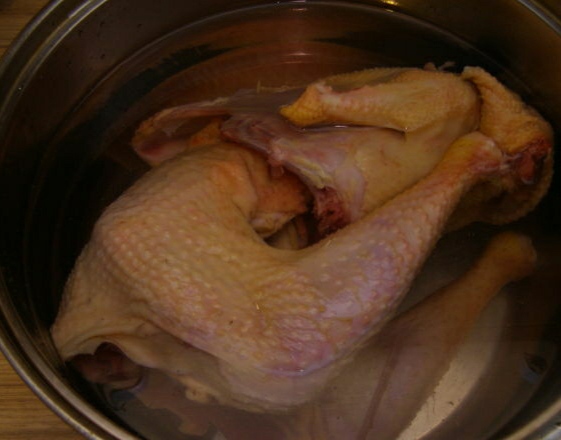
- Singe the carcass over the fire to remove the remaining hairs. Wash the chicken, put in a saucepan and cover with cold water. To get a rich chicken broth, the chicken must be poured only with cold water at the rate of 2 liters of water per 1 kg of chicken. If the water does not cover the chicken, you need to use another pan. Or, as a last resort, you can add a maximum of another 0.5 liters of water.
- Put a couple of peeled carrots and a well-washed onion in the husk in a saucepan, chicken broth with carrots and onions turns out to be a beautiful golden color.
- Bring the water to a boil, keeping a close eye on the saucepan so as not to miss the boil. Before the broth begins to boil, reduce the heat and carefully remove the resulting foam with a slotted spoon. When all the foam has been removed, leave the broth to simmer over low heat, avoiding a strong boil. Remove the carrots and onions from the broth 15-20 minutes after boiling.
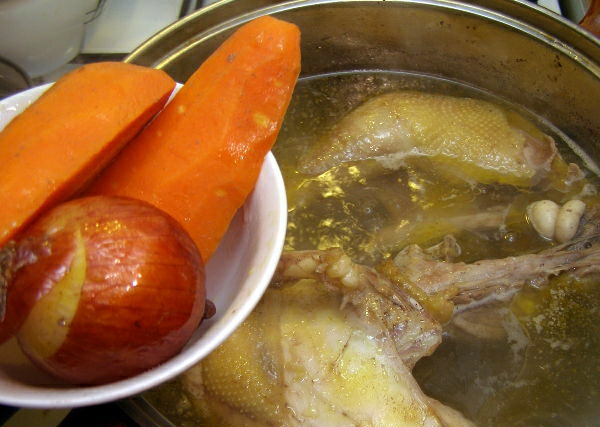
- Chicken broth is cooked for about an hour and a half. Salt the broth before turning off the heat. Bay leaf and pepper are not put in chicken broth, as they interrupt its unique delicate aroma. To make the chicken broth absolutely transparent, filter it through a strainer or several layers of gauze.
- This broth can be used as a basis for a variety of soups, borscht. Or you can serve chicken broth as an independent dish. In this case, the broth is poured into a bowl or a special cup, sprinkled with ground black pepper and chopped herbs.
Enjoy your meal!


About Editorial Staff
The Boss Kitchen editorial staff oversees content review, fact-checking, and recipe verification across the site. Published articles pass through the editorial team before going live, ensuring ingredient lists, techniques, cooking times, and nutritional claims hold up in a home kitchen. The team coordinates contributions across the site writers, handles reader corrections, and maintains consistency in measurement conventions, safety guidance, and dietary labeling. Posts under this byline typically represent team-reviewed reference material, site announcements, or editorial roundups rather than individual-author features, and they are held to the same sourcing standards as bylined recipe and product coverage.
Get FREE Recipe Gifts now. Or latest free cooktops from our best collections.
Disable Ad block to get all the secrets. Once done, hit any button below