Salad with chicken liver, salted mushrooms and cheese is a salad with a very interesting taste, quite unusual and very satisfying.
Summary
| Prep Time | 20 mins |
| Cook Time | 20 mins |
| Total Time | 40 mins |
| Course | Salad |
| Cuisine | Russian |
 Ingredients
 Ingredients
- Chicken liver – 300 g
- Salted mushrooms – 200 g
- Hard cheese – 150 g
- Carrots – 1 pc.
- Bulb onions – 1 pc.
- Mayonnaise (or sour cream with mustard) – to taste
- Bay leaf – 1 pc.
- Allspice peas – 4 pcs.
- Ground pepper (optional) – to taste
- Salt (if necessary) – to taste
- Sunflower oil – for frying
- Fresh greens – for decoration

 Print Recipe
 Pin Recipe
 Instructions
- Wash the chicken liver, cut off excess films. If there are yellow spots on the pieces of liver, be sure to cut them off, otherwise the liver will be bitter.
- Bring water to a boil, add allspice peas and bay leaf.
- Send the liver to boiling water. Wait for the water to boil, reduce heat, and cook the chicken liver for 10 minutes. Remove the curdled protein on the surface of the water. Do not salt the water.
- Turn off the heat, remove the boiled liver and let it cool down.
- Cut the onion into cubes or thin quarters of rings.
- Grate the carrots on a coarse grater.
- Chop the salted mushrooms. If the mushrooms are too salty, then rinse them first.
- Cut the liver into small cubes.
- Grate the cheese on a fine grater.
- Fry the onion separately in heated vegetable oil until lightly golden.
- Remove the onion and fry the carrots for 3-4 minutes in the same pan with strong heat. If there is not enough oil in the pan, add. Transfer the carrots to a separate container.
- Add some oil to the pan and fry the mushrooms for a couple of minutes to evaporate the liquid.
- Combine the salad ingredients, add two-thirds of the cheese, and season with mayonnaise (or sour cream and half a teaspoon of mustard). Taste and add salt and pepper if desired. (This salad can be assembled in layers in the following sequence: liver and mayonnaise, carrots, onions, mushrooms and mayonnaise, cheese.)
- Place two rings of different dias on a plate. (If no cooking rings are available, place a glass in the center of the plate and line the salad around the glass.)
- Put the salad with boiled liver, salted mushrooms and cheese between the rings.
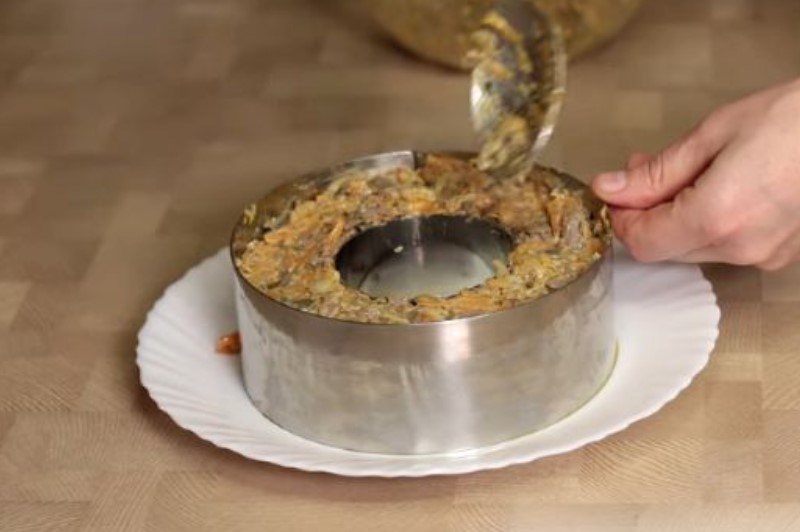
- Remove the rings carefully.
- Sprinkle the prepared chicken liver and mushroom salad with the remaining cheese.
- You can decorate the salad with fresh herbs.
Bon Appetit!


About Editorial Staff
The Boss Kitchen editorial staff oversees content review, fact-checking, and recipe verification across the site. Published articles pass through the editorial team before going live, ensuring ingredient lists, techniques, cooking times, and nutritional claims hold up in a home kitchen. The team coordinates contributions across the site writers, handles reader corrections, and maintains consistency in measurement conventions, safety guidance, and dietary labeling. Posts under this byline typically represent team-reviewed reference material, site announcements, or editorial roundups rather than individual-author features, and they are held to the same sourcing standards as bylined recipe and product coverage.
Get FREE Recipe Gifts now. Or latest free cooktops from our best collections.
Disable Ad block to get all the secrets. Once done, hit any button below