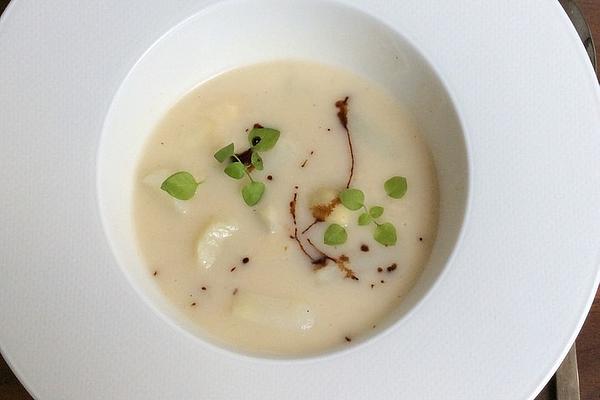
Kay`s Asparagus Cream Soup Made from Asparagus Peels
by Editorial Staff
Summary
| Prep Time | 15 mins |
| Cook Time | 45 mins |
| Total Time | 1 hr |
| Course | Appetizers & Snacks |
| Cuisine | European |
| Servings (Default: 4) |
 Ingredients
- Asparagus shells 1 kg white asparagus
- 1 liter cold water
- 50 g butter
- 2 tablespoon, heaped flour
- a bit salt
- 1 pinch (s) sugar
- 1 dash lemon juice, freshly squeezed
- 1 pinch (s) nutmeg, freshly grated
- 1 dash cream, optional
- possibly asparagus, cooked, in small pieces (amount as desired)
 Print Recipe
 Pin Recipe
 Instructions
- Using a food as completely as possible is rightly considered the highest art of the thrifty housewife and it was not without reason that it once filled entire cookbooks. Today we have unfortunately lost many parts of this knowledge, and with it many good recipes, or it is no longer feasible due to food that has already been processed industrially.
- Here I would like to give you an old recipe that enables everyone to use the waste when preparing asparagus to cook a very delicious additional course.
- Take a medium-sized saucepan with a lid and add the asparagus peels and leftovers. It makes sense to press them flat in order to use less water for cooking. Then pour cold water on top and bring it to a boil. Cook the bowls in a closed saucepan for 30 minutes, not longer, otherwise the soup will be bitter.
- Cook the asparagus pieces in a second saucepan, put them aside and pour the cooking water into the bowls, a total of approx. 1 liter of soup is required.
- Then melt the butter in the saucepan and prepare a light roux. Gradually add the strained cooking water from the asparagus peels while stirring with the whisk.
- Let the soup simmer for about 10 minutes and season with salt, sugar, lemon juice and nutmeg. If you like, you can refine it with a dash of cream and add the pre-cooked asparagus pieces.
- Tips: If the asparagus itself wasn`t bitter, this soup won`t be either, it makes a great tasting soup for all kinds of asparagus dishes.
- It is possible to freeze asparagus peels at -20 ° C and collect them over the entire season so that you can cook asparagus cream soup later in the year.
 Also Like

Asparagus Casserole Made from Raw Asparagus
The perfect asparagus casserole made from raw asparagus recipe with a picture and simple step-by-step instructions. More...

Asparagus Salad Made from Raw Asparagus
The perfect asparagus salad made from raw asparagus recipe with a picture and simple step-by-step instructions. More...

Asparagus Salad Made from White Asparagus
The perfect asparagus salad made from white asparagus recipe with a picture and simple step-by-step instructions. More...

Simple Asparagus Cream Soup Made Only from Leftovers
The perfect simple asparagus cream soup made only from leftovers recipe with a picture and simple step-by-step instructions. More...

They say that this soup is very popular in Germany and Austria – there it is considered almost a national dish. Maybe so, I don’t know, but the fact that it tastes amazing is for sure! Servings: 4-5 Cook: 1 hour Ingredients Asparagus – 0.5 Kilogram Onion ...

Asparagus Soup Really Only Made from Leftovers
The perfect asparagus soup really only made from leftovers recipe with a picture and simple step-by-step instructions. More...

Asparagus or asparagus is a tasty and healthy plant, but it is still rarely used in our kitchen. Asparagus can be steamed, grilled or baked in the oven, and raw asparagus salads can be made. This is one of the earliest spring plants, so I advise you to tr...

Asparagus Made from Great-grandma Luise`s Recipe
The perfect asparagus made from great-grandma luise`s recipe recipe with a picture and simple step-by-step instructions. More...

The perfect asparagus in cream recipe with a picture and simple step-by-step instructions. More...

Cream Of Asparagus Soup Exotic
The perfect cream of asparagus soup exotic recipe with a picture and simple step-by-step instructions. More...

Cream Of Asparagus Soup with Crabs
The perfect cream of asparagus soup with crabs recipe with a picture and simple step-by-step instructions. More...

Cream Of Asparagus Soup with Ham
The perfect cream of asparagus soup with ham recipe with a picture and simple step-by-step instructions. More...

Cream Of Asparagus Soup with Prawns
The perfect cream of asparagus soup with prawns recipe with a picture and simple step-by-step instructions. More...

Cream Of Champagne and Asparagus Soup
The perfect cream of champagne and asparagus soup recipe with a picture and simple step-by-step instructions. More...

The perfect cream of green asparagus soup recipe with a picture and simple step-by-step instructions. More...

The perfect fine cream of asparagus soup recipe with a picture and simple step-by-step instructions. More...

Schrobenhausen Cream Of Asparagus Soup
The perfect schrobenhausen cream of asparagus soup recipe with a picture and simple step-by-step instructions. More...

Do you want to taste tenderness? Then be sure to read this recipe! You will be enveloped in a creamy texture with the same mild smell and taste. And it looks beautiful. Worth your attention! Servings: 4 Cook: 30 mins Ingredients Asparagus – 1 Kilogram (Wh...

Potato and Asparagus Cream Soup
The perfect potato and asparagus cream soup recipe with a picture and simple step-by-step instructions. More...

The perfect quick cream of asparagus soup recipe with a picture and simple step-by-step instructions. More...
Comments for "Kay`s Asparagus Cream Soup Made from Asparagus Peels"
 |
 |
 |
 |


Get FREE Recipe Gifts now. Or latest free cooktops from our best collections.
Disable Ad block to get all the secrets. Once done, hit any button below
|
|
|
|