Traditionally, in Greek cuisine, as well as in some other countries, moussaka with eggplant is a meat dish. According to this recipe, the Bulgarian moussaka with eggplants and tomatoes is prepared without meat, but with rice.
Summary
| Cook Time | 1 hour 30 min |
| Total Time | 1 hour 30 min |
| Course | Side Dish |
| Servings (Default: 6) |
 Ingredients
 Ingredients
- Eggplant – 1 kg
- Onions – 2-3 pcs.
- Rice – 100 g
- Tomatoes – 4 pcs.
- Vegetable oil – 150 g
- Eggs – 3 pcs.
- Flour – 2 tbsp
- Milk – 1.5 cups
- Salt – 1 teaspoon (to taste)

 Print Recipe
 Pin Recipe
 Instructions
- Moussaka products with eggplant and rice.
- Rinse the rice in cold water.
- Peel, wash, cut the eggplants into circles (or slices).
- Peel the onion, wash, chop finely.
- Preheat a frying pan, pour 3 tablespoon. tablespoons of vegetable oil. Put the eggplants in hot oil, without salt. Fry on very hot fat until golden brown on one side (1-2 minutes). Then fry in the same way on the other side. So fry all the eggplants, add oil as needed.
- Preheat another skillet separately. Pour 2-3 tablespoon. tablespoons of vegetable oil. Put prepared onions in hot oil. Fry finely chopped onions over medium heat until soft (1-2 minutes).
- When the onion is soft, add the washed rice.
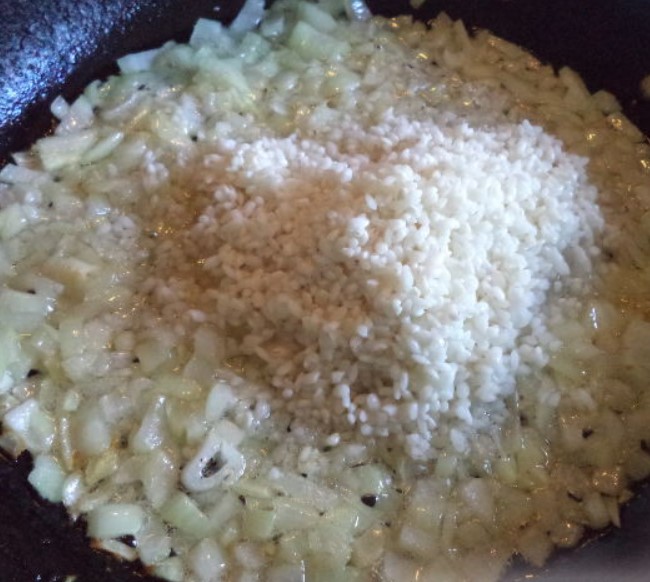
- Then lightly fry it, stirring occasionally, (about 1 minute).
- Then pour in 1.5 cups of water, salt and keep on low heat until the rice has absorbed the water (about 10 minutes). Turn on the oven.
- Wash tomatoes, cut into circles or slices.
- Lightly grease the bottom of a wide baking dish, casserole or rooster.
- Put the tomato slices in it.
- Then fried eggplants.
- Further on them – fig.
- Spread the rest of the eggplants evenly over the rice.
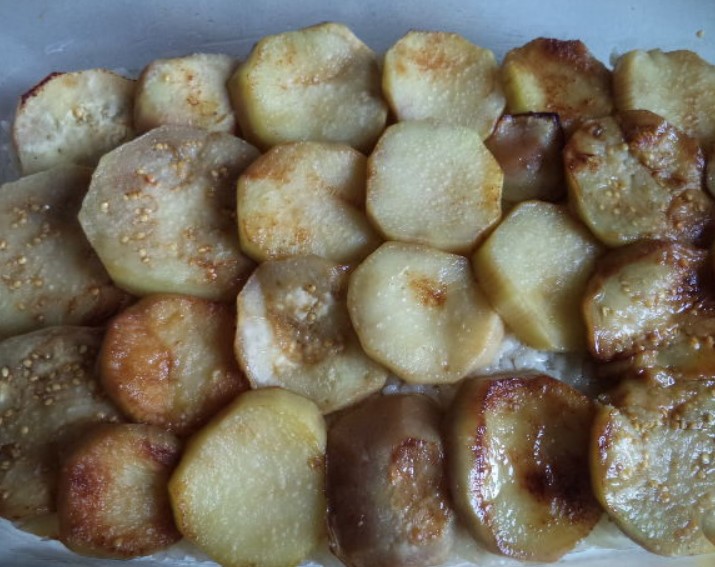
- Cover the eggplants with tomato slices again, add a little salt.
- Then the eggplant moussaka is baked in the oven for 20-30 minutes at a temperature of 190 degrees.
- Beat eggs with milk and flour.
- Pour the egg mass over the moussaka.
- Place the moussaka with rice and eggplant in the oven again until the egg-milk mixture is baked (about 15-20 minutes).
- Eggplant moussaka with rice is ready.
Enjoy your meal!


About Editorial Staff
The Boss Kitchen editorial staff oversees content review, fact-checking, and recipe verification across the site. Published articles pass through the editorial team before going live, ensuring ingredient lists, techniques, cooking times, and nutritional claims hold up in a home kitchen. The team coordinates contributions across the site writers, handles reader corrections, and maintains consistency in measurement conventions, safety guidance, and dietary labeling. Posts under this byline typically represent team-reviewed reference material, site announcements, or editorial roundups rather than individual-author features, and they are held to the same sourcing standards as bylined recipe and product coverage.
Get FREE Recipe Gifts now. Or latest free cooktops from our best collections.
Disable Ad block to get all the secrets. Once done, hit any button below