Hungarian beef goulash soup is a great option for lunch. The goulash soup according to this recipe is very satisfying and aromatic. Since Hungarian goulash soup is both the first and the second in one, adjust the amount of liquid at your discretion.
Summary
| Prep Time | 20 mins |
| Cook Time | 2 hrs 30 mins |
| Total Time | 2 hrs 50 mins |
| Course | Soup |
| Cuisine | Hungarian |
 Ingredients
 Ingredients
- Beef (or veal) – 500 g
- Potatoes – 500 g
- Bulgarian pepper – 1 pc.
- Carrots – 2 pcs.
- Tomatoes – 2 pcs.
- Bulb onions – 2 pcs.
- Garlic – 2 cloves
- Tomato paste – 1 tablespoon
- Water – 3 glasses
- Ground paprika – 1 tbsp
- Vegetable oil – 80 ml
- Cumin – 1 pinch
- Salt to taste

 Print Recipe
 Pin Recipe
 Instructions
- We prepare all the necessary ingredients.
Take potatoes of non-boiling varieties.
It is best to use a cast-iron cauldron for making goulash.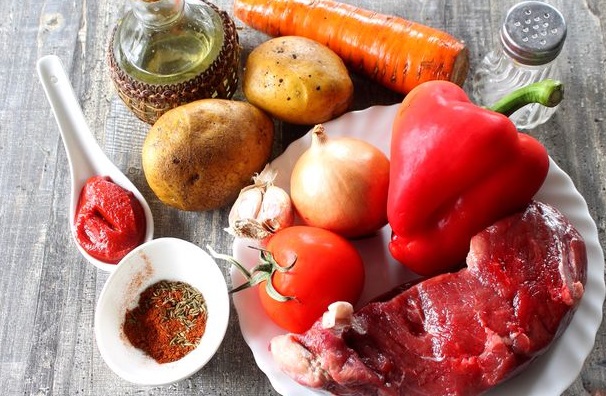
- Peel the onions and chop finely.
Heat half of the vegetable oil in a cauldron. We send onions and tomato paste there, fry over medium heat for 5 minutes.
We remove from the fire. - Peel the garlic, chop it and add to the onion together with paprika and caraway seeds. We mix.
We transfer the contents of the cauldron to a separate plate. - Cut the meat into cubes with a side of 1 cm. In a cauldron, heat the remaining vegetable oil and fry the pieces of beef over medium heat until golden brown.
- We shift the onion frying into the cauldron with meat. Pour a glass of water, bring to a boil.
- Cover with a lid and cook the meat in tomato sauce over very low heat for 1.5-2 hours until the water boils away. Top up with water if necessary.
- Peel the bell peppers from seeds and cut them into squares. Peel and dice the carrots. Cut the tomatoes into cubes too.
Next, add bell peppers, carrots, and tomatoes to the cauldron. - Peel the potatoes, cut into cubes and send them to the cauldron. Salt.
- Fill the cauldron contents with 2 glasses of water. Bring to a boil, reduce heat, and cook beef goulash under the lid for another 20-25 minutes.
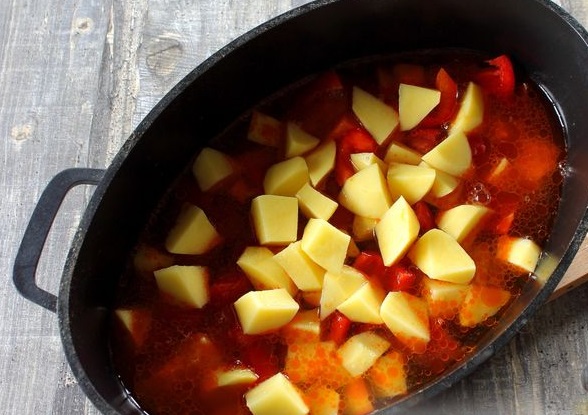
- Let the prepared goulash soup steep in a cauldron for 10 minutes.
- Hungarian beef goulash soup is ready to serve.
Bon Appetit!


About Editorial Staff
The Boss Kitchen editorial staff oversees content review, fact-checking, and recipe verification across the site. Published articles pass through the editorial team before going live, ensuring ingredient lists, techniques, cooking times, and nutritional claims hold up in a home kitchen. The team coordinates contributions across the site writers, handles reader corrections, and maintains consistency in measurement conventions, safety guidance, and dietary labeling. Posts under this byline typically represent team-reviewed reference material, site announcements, or editorial roundups rather than individual-author features, and they are held to the same sourcing standards as bylined recipe and product coverage.
Get FREE Recipe Gifts now. Or latest free cooktops from our best collections.
Disable Ad block to get all the secrets. Once done, hit any button below