Delicious hearty pork shank dish.
Summary
| Cook Time | 4 hrs |
| Total Time | 12 hrs |
| Course | Main Dish |
| Cuisine | Russian |
 Ingredients
 Ingredients
- Pork knuckle – 1 pc.
- Pork tongues – 2 pcs.
- Large carrots – 1 pc.
- Medium onions – 3 pcs.
- Bay leaf – 3-4 pcs.
- A mixture of peppers – 10 peas of different peppers
- Salt
- Greens (parsley, dill) – 1 bunch
- Garlic – 3-4 cloves

 Print Recipe
 Pin Recipe
 Instructions
- Cook the tongues and shank separately. Place in suitable pots, fill with water to cover, and set on fire. Since the leather from the shank will be used later, inspect it for stubble. It can be removed with a disposable shaving machine. When it boils, remove the foam, reduce the heat, add vegetables, salt, bay leaf, pepper and cook the shank with the lid ajar for 3.5-4 hours. The meat should fall well behind the bones. Cook the tongues for about 2-2.5 hours in salted water with bay leaves and pepper, cool them under running cold water and clean them from the skin.
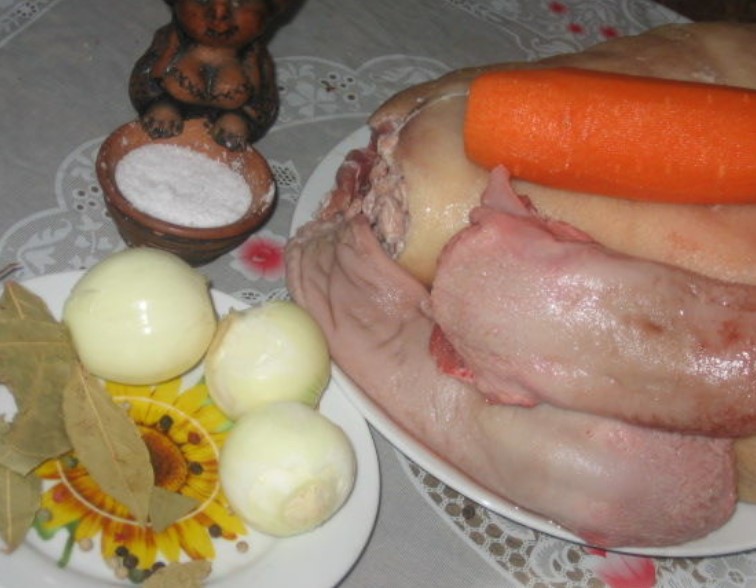
- Let the boiled knuckle cool slightly in the broth, then disassemble the meat into muscles and cut it into pieces. Add chopped tongues, chopped herbs, garlic and boiled carrots in pieces to the meat. Season with salt and pepper to taste. Add 1 glass of low-fat broth left over from boiling the shank. I did not add gelatin, but if you are afraid that the terrine will harden badly, you can add gelatin to the broth according to the instructions. Mix everything well. We will try to carefully remove fat from the skin. If you eat it, you can add it to meat or use it for other purposes. It’s not scary if the skin is torn a little, you can lay it out in pieces.
- The selected shapes (preferably rectangular), lay out with cling film, then pork skin inside the shape. There was enough skin for 1 mold. Put the meat mixture on the skin. The meat mixture was enough for two forms. We seal by hand so that the liquid only appears on the surface of the meat. If necessary, we can add broth. Cover the meat on top with leather and cling film. We put in the refrigerator for at least 8 hours (overnight).
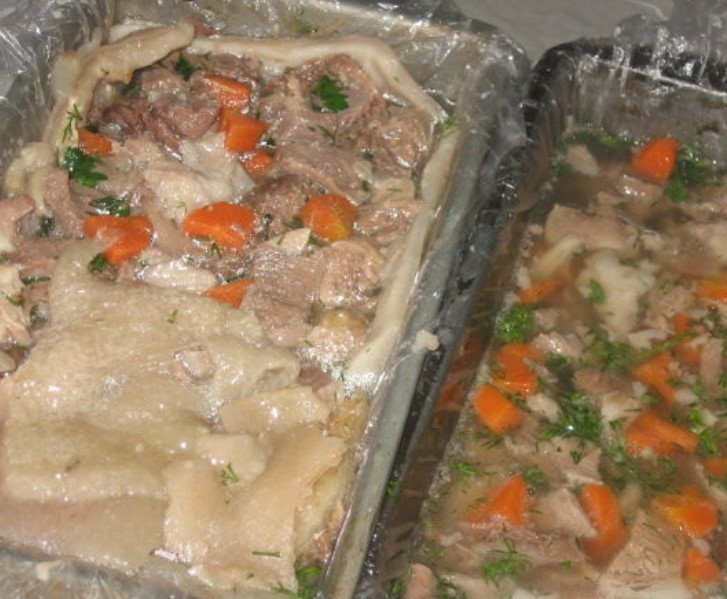
- Frozen terrine is easily removed from the mold with the help of a film. We cut it into pieces. It’s delicious with bread and mustard or horseradish. Although the terrine in the pork skin looked prettier, my household ate the terrine without the skin faster.
Bon Appetit!


About Editorial Staff
The Boss Kitchen editorial staff oversees content review, fact-checking, and recipe verification across the site. Published articles pass through the editorial team before going live, ensuring ingredient lists, techniques, cooking times, and nutritional claims hold up in a home kitchen. The team coordinates contributions across the site writers, handles reader corrections, and maintains consistency in measurement conventions, safety guidance, and dietary labeling. Posts under this byline typically represent team-reviewed reference material, site announcements, or editorial roundups rather than individual-author features, and they are held to the same sourcing standards as bylined recipe and product coverage.
Get FREE Recipe Gifts now. Or latest free cooktops from our best collections.
Disable Ad block to get all the secrets. Once done, hit any button below