Puff pastries are an excellent substitute for bored bread or lavash used every day. Incredibly soft, puff pastry cakes that melt in your mouth can be eaten not only with first courses, salads or barbecue, but also served with tea as a savory dessert.
Summary
| Prep Time | 80 mins |
| Cook Time | 15 mins |
| Total Time | 95 mins |
| Course | Dessert |
| Servings (Default: 4) |
 Ingredients
 Ingredients
For puff pastry:
- Wheat flour of the highest grade – 1 kg
- Milk 3.2% fat – 250 ml
- Filtered water – 250 ml
- Vegetable oil – 125 ml
- Dry yeast – 10 g
- Salt – 5 g

To lubricate the cakes:
- Ghee butter – 200 g
- Vegetable oil – 100 ml
- Egg yolk – 1 pc.
- Yogurt (unflavored) – 10 g
 Print Recipe
 Pin Recipe
 Instructions
- Pour warm milk into a deep container.
- Add slightly warmed water.
- Pour in dry yeast.
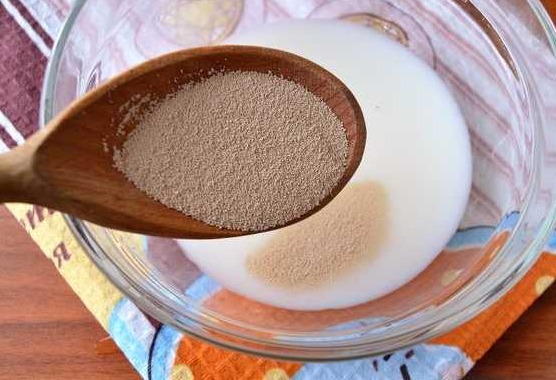
- Pour in vegetable oil and salt.
- Stir the ingredients vigorously.
- Pour in flour sifted through a sieve.
- We mix the ingredients and knead the plastic dough.
- We place the dough in a container, cover with a towel and send it to a warm, windless place for 60 minutes.
- We mix ghee with vegetable oil.
- We form balls with a diameter of no more than 4-5 cm from the dough. I got 12 balls.
- Stretch the ball until a cake forms. Lubricate it on both sides with an oil mixture.
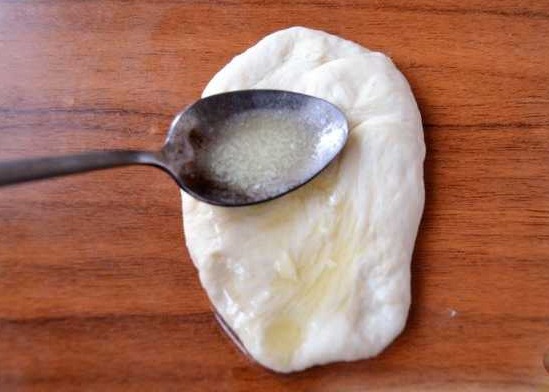
- Roll out the dough so that the cake is oval. The dough can also be stretched by hand if it is elastic enough.
- We fold the cake with an envelope.
- We make the next cake, also grease it with an oil mixture.
Place the first dough carpet in the center of the resulting cake. - We wrap the edges of the second cake to make an envelope again. We make a third cake and repeat the same steps as for the first two cakes.
As a result, one cake should take three lumps of dough. As a result, four cakes will be formed. - Roll the resulting dough envelope into a layer.
- Place the multi-layer cakes on a plate and send them to a cold place for 20 minutes.
- After a while, we transfer the cakes to a baking sheet covered with parchment. Superficially make cuts diagonally.
- Mix the egg yolk with unflavored yogurt.
- Lubricate each cake with an egg-yogurt mixture.
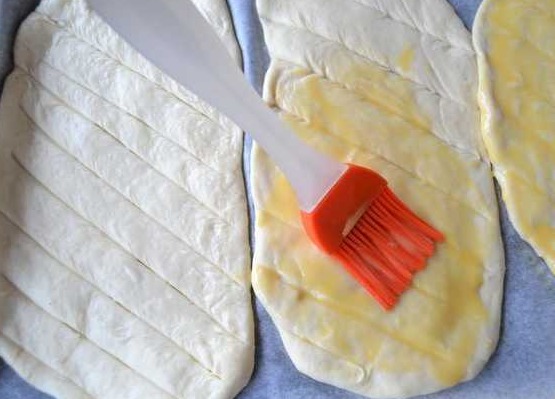
- We send puff pastries to a well-heated oven for 15 minutes at a temperature of 180-200 degrees.
- Hot flaky cakes give off an amazingly appetizing aroma of buttery pastry.
- To keep the cakes for a long time their original softness, store them under a lid or towel.
Bon Appetit!


About Editorial Staff
The Boss Kitchen editorial staff oversees content review, fact-checking, and recipe verification across the site. Published articles pass through the editorial team before going live, ensuring ingredient lists, techniques, cooking times, and nutritional claims hold up in a home kitchen. The team coordinates contributions across the site writers, handles reader corrections, and maintains consistency in measurement conventions, safety guidance, and dietary labeling. Posts under this byline typically represent team-reviewed reference material, site announcements, or editorial roundups rather than individual-author features, and they are held to the same sourcing standards as bylined recipe and product coverage.
Get FREE Recipe Gifts now. Or latest free cooktops from our best collections.
Disable Ad block to get all the secrets. Once done, hit any button below