Japanese cotton cheesecake is similar to a very tender, fluffy, and fluffy sponge cake. It differs from our usual cheesecake by containing less cream cheese and, therefore, lower calorie content and more moderate cost of ingredients, as well as less sweet and more vanilla delicate taste with a slight lemon sourness. And the cotton cheesecake melts in your mouth!
Summary
| Prep Time | 30 mins |
| Cook Time | 90 mins |
| Total Time | 2 hrs |
| Course | Dessert |
| Cuisine | Japanese |
 Ingredients
 Ingredients
- Cream cheese (for example mascarpone) – 180 g
- Butter – 40 g
- Milk – 70 ml
- Eggs – 4 pcs.
- Sugar – 100 g
- Flour – 30 g
- Corn starch – 30 g
- Lemon juice – 1 tbsp
- Vanillin – 1 pinch
- Salt – 1 pinch

 Print Recipe
 Pin Recipe
 Instructions
- It is better to remove butter, eggs, and cream cheese from the refrigerator in advance so that they are at room temperature.
- Separate the whites from the yolks carefully. Send the whites to the beating bowl, the yolks to a separate bowl.
- Combine cream cheese, butter, and milk in a deep bowl that can be placed in a water bath.
- Place this bowl in a water bath (i.e. set over a saucepan of boiling water so that the bottom of the bowl is above the surface of the water).
Stir constantly with a whisk or spatula until the butter is melted and a smooth paste forms. - Cool the resulting mass to room temperature and add the yolks one at a time, stirring well each time with a whisk.
- Add vanillin (or vanilla essence) and lemon juice to the dough, stir.
- Sift flour and cornstarch into a bowl of dough (when measuring them, it is better to use a scale, but if this is not possible, take a tablespoon with a high slide). Stir.
- Prepare the form in which you will bake the cheesecake: grease the walls and bottom of the form with a thin layer of butter and line them with parchment – for convenience, it is better to cut a circle out of parchment with a dia like the bottom of the form. Make the parchment sides much higher than the walls of the mold – this way the cheesecake will not spread when it is lifted and will bake more evenly.
Preheat the oven to 160 degrees. - Whisk the egg whites until stiff peaks.
- While whisking the egg whites, add sugar gradually. Beat until the sugar is completely dissolved.
- Add the egg whites whipped with sugar in portions into the dough, gently stirring in with a spatula so that the yellow dough and snow-white whites are well combined with each other.
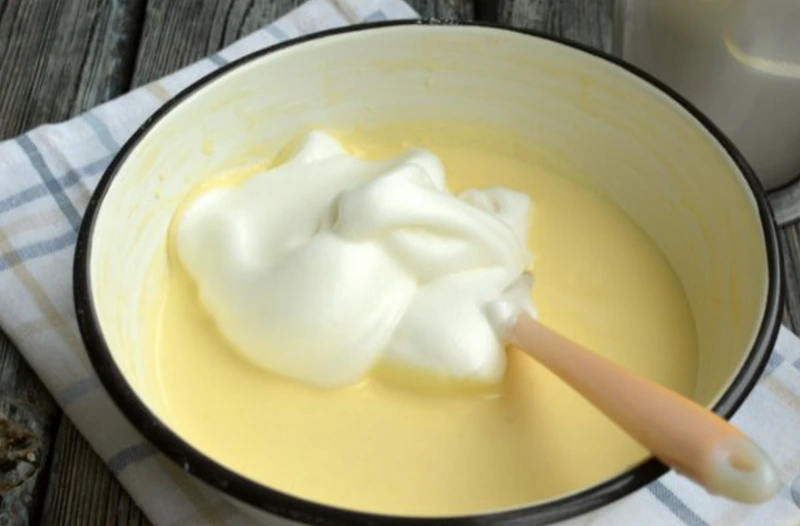
- The finished dough should turn out to be a uniform light color, without streaks, airy, and drain from the spatula in a thick stream.
- Pour the dough into the prepared mold. Tap the mold lightly on the table to release air bubbles. Place the dough pan in a wider rimmed baking dish or saucepan (no plastic inserts). Fill an external container with hot water to 1/3 of the dough level.
Bake the cheesecake at 160 degrees for 20 minutes, then reduce the temperature to 145 degrees and bake for another 40 minutes. The surface should be lightly browned and covered with small cracks. - Don’t take the cheesecake out of the oven right away. Open the oven door for 10 minutes, then remove the dish with water and return the cheesecake to the oven for another 30 minutes. It will settle slightly, but still, remain airy and tall.
Remove the cheesecake from the oven and leave it on the table for another 30 minutes, until it cools completely. - Gently turn the cheesecake onto a plate and peel off the parchment.
In my opinion, cotton cheesecake tastes better if it’s completely cooled down and has stood at least overnight in the refrigerator. It becomes more “mature” and tastes brighter.
Take the pie out of the fridge and decorate to your liking – I garnish with powdered sugar, berries, a sprig of rosemary, and basil leaves. - The cotton cheesecake is ready. Such a beautiful and delicious dessert can even be served on a festive table.
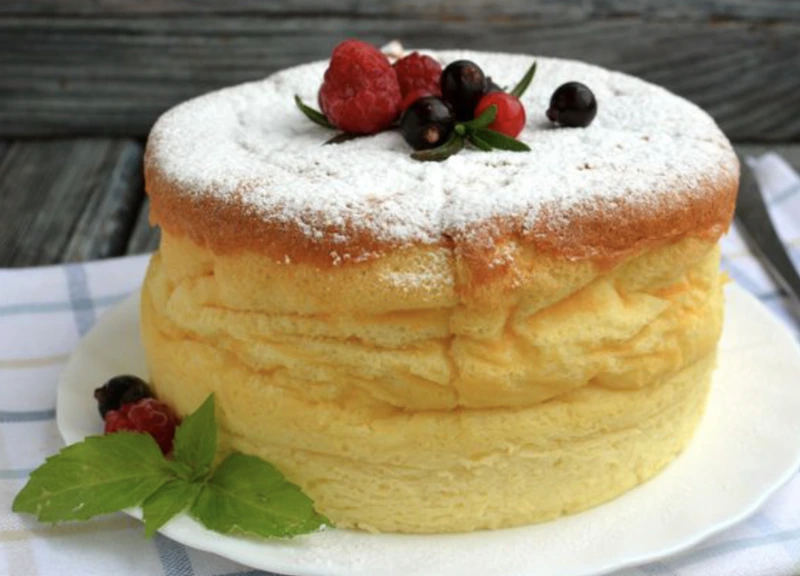
Enjoy your meal!


About Editorial Staff
The Boss Kitchen editorial staff oversees content review, fact-checking, and recipe verification across the site. Published articles pass through the editorial team before going live, ensuring ingredient lists, techniques, cooking times, and nutritional claims hold up in a home kitchen. The team coordinates contributions across the site writers, handles reader corrections, and maintains consistency in measurement conventions, safety guidance, and dietary labeling. Posts under this byline typically represent team-reviewed reference material, site announcements, or editorial roundups rather than individual-author features, and they are held to the same sourcing standards as bylined recipe and product coverage.
Get FREE Recipe Gifts now. Or latest free cooktops from our best collections.
Disable Ad block to get all the secrets. Once done, hit any button below